Buying process · Buyer guide
Closing Costs in Los Cabos: A Complete Breakdown for Buyers and Sellers
Nolan Bonnstetter | Own Cabo Homes | Outliance
Los Cabos Luxury Real Estate | 13 years in real estate | 7 years in Los Cabos | 250+ transactions
What buyers and sellers actually pay between an accepted offer and a signed deed in Los Cabos — line item by line item.
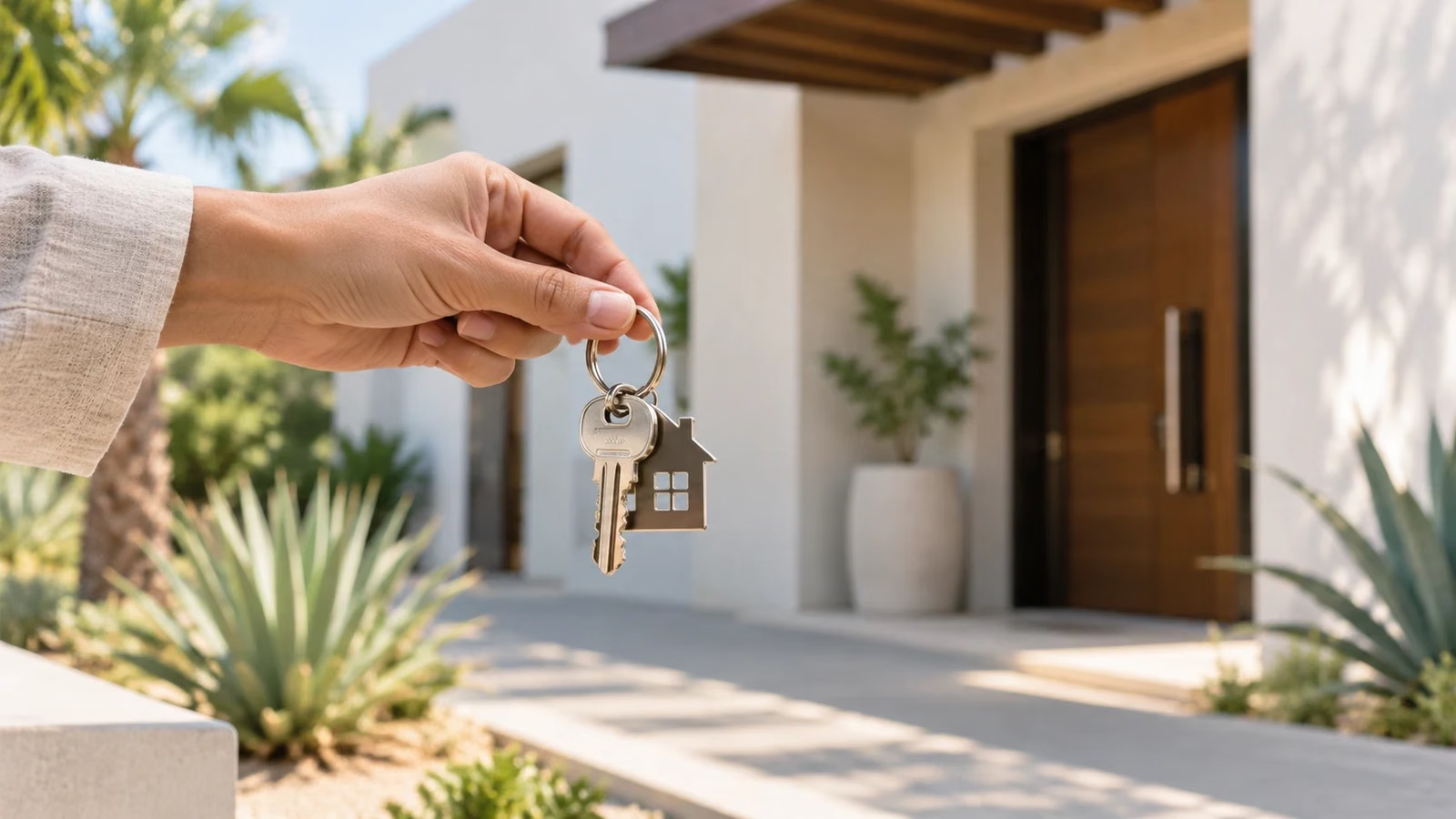
Understanding closing costs in Los Cabos is not optional — it is foundational to planning any transaction correctly. Buyers need to know what to budget above the purchase price. Sellers need to understand what leaves the table at closing, including a tax structure that operates nothing like the U.S. or Canadian systems most of them are accustomed to. Getting these numbers wrong, or discovering them late, changes the math on deals that otherwise made sense.
Over 13 years in real estate — the past 7 exclusively in Los Cabos — and across more than 250 closed transactions, I have walked buyers and sellers through these costs in detail before every closing. This guide reflects what those numbers actually look like in 2026.
Buyer Closing Costs
Buyer closing costs in Los Cabos typically run between 4% and 8% of the purchase price, depending on the property type, the bank administering the trust, and the specifics of the transaction. The range is wide enough that budgeting toward the higher end is the more prudent approach.
The largest single line item is the acquisition tax — Impuesto de Adquisición de Inmuebles — which in Los Cabos runs at 3% of the purchase price. On a $1,000,000 USD transaction, that is $30,000 before any other fees are calculated. This is not negotiable and not waivable.
Notario fees are the next significant cost. The Notario Público is a highly specialized legal professional who oversees the title transfer, verifies the legality of the transaction, and issues the deed. This is not the equivalent of a notary public in the U.S. — the role carries considerably more legal weight and responsibility. Notario fees generally run between 0.5% and 1.5% of the purchase price, which on a million-dollar transaction translates to roughly $7,000 to $15,000.
Foreign buyers purchasing property in Mexico’s restricted zone — which includes the Los Cabos coastline — are required to hold title through a fideicomiso, or bank trust. The setup cost is typically between $1,200 and $2,000 USD, with an annual renewal fee of $500 to $700. The fideicomiso provides full ownership rights; the bank administers the trust but has no claim on the property.
Additional buyer costs include an official appraisal, which banks require during trust setup and which typically runs $300 to $500 USD, and a Certificate of No Lien, which verifies the property carries no outstanding encumbrances and generally costs between $150 and $300. Title insurance is optional but worth considering for foreign buyers — it runs approximately 0.5% to 0.75% of the purchase price and provides an additional layer of protection against title defects that due diligence may not surface.
On a $1,000,000 purchase in Chileno Bay, a buyer should realistically budget between $45,000 and $63,000 in closing costs, inclusive of title insurance. Excluding title insurance, the lower end of that range is closer to $39,000.
Seller Closing Costs
Sellers in Los Cabos face fewer line items than buyers, but the total exposure is often larger because of one variable that dominates the calculation: capital gains tax.
Real estate commissions in Los Cabos typically range from 6% to 8% of the sale price, depending on the brokerage and the scope of services. On a $1,500,000 sale in Pedregal, that is $90,000 to $120,000 off the top. This is the most predictable seller cost and the easiest to plan for.
The capital gains structure is where foreign sellers most often get surprised. Mexico taxes capital gains under the ISR — Impuesto Sobre la Renta — and applies the higher of two calculations: 25% of the gross sale proceeds, or 35% of the net taxable gain after allowable deductions. Those deductions can include the original acquisition cost, documented improvements supported by valid Mexican invoices, certain closing costs from the original purchase, and an inflation adjustment applied annually to the cost basis. The deduction structure is meaningful, but it requires documentation. Sellers who have not maintained proper records, or who made improvements without obtaining Mexican fiscal invoices, lose access to deductions they would otherwise be entitled to claim.
This is why notario selection matters significantly on the seller side. The notario calculates and withholds the capital gains tax at closing. An experienced notario who understands the deduction framework and has access to proper documentation can materially affect the seller’s tax outcome. This is not a place to defer to whoever the developer or the buyer’s bank recommends.
Foreign sellers who do not already have a Mexican tax identification number — RFC, or Registro Federal de Contribuyentes — will need to obtain one prior to closing. I coordinate this with the closing attorney as a standard part of transaction management to avoid delays.
Sellers are also responsible for providing HOA clearance, utility certificates, and a current property tax receipt — the predial. These are administrative costs, typically minor, but they need to be in order before closing can proceed.
What Buyers and Sellers Most Often Overlook
On the buyer side, costs are relatively predictable and the surprises are usually modest — an appraisal that comes in slightly higher, or a fideicomiso setup fee at the top of the range rather than the bottom. The bigger risk is simply not budgeting for closing costs at all and treating the purchase price as the total outlay.
On the seller side, the capital gains calculation is where the most consequential oversights happen. Sellers who wait until they have an accepted offer to think about their tax basis are often working with incomplete information at exactly the moment they need clarity. Pre-listing tax planning — reviewing the cost basis, confirming available deductions, and understanding the likely tax outcome before the property goes to market — is the single most valuable thing a seller can do to protect their net proceeds.
If you are buying or selling in Los Cabos and want a personalized closing cost breakdown specific to your property and transaction, that is a straightforward conversation to have before you are under contract.
Nolan Bonnstetter
Real Estate Professional | Own Cabo Homes
Los Cabos, B.C.S., Mexico
+1-515-802-7151Nolan@owncabohomes.comhttps://owncabohomes.com/