Ownership & operations · Research memo
Vacation Rental ROI in Los Cabos: Is It Worth It?
Nolan Bonnstetter | Own Cabo Homes | Outliance
Los Cabos Luxury Real Estate | 13 years in real estate | 7 years in Los Cabos | 250+ transactions
Los Cabos rental yields split sharply by neighborhood type — here's what luxury enclaves and rental-friendly zones actually return, and how to tell which one fits your goals.
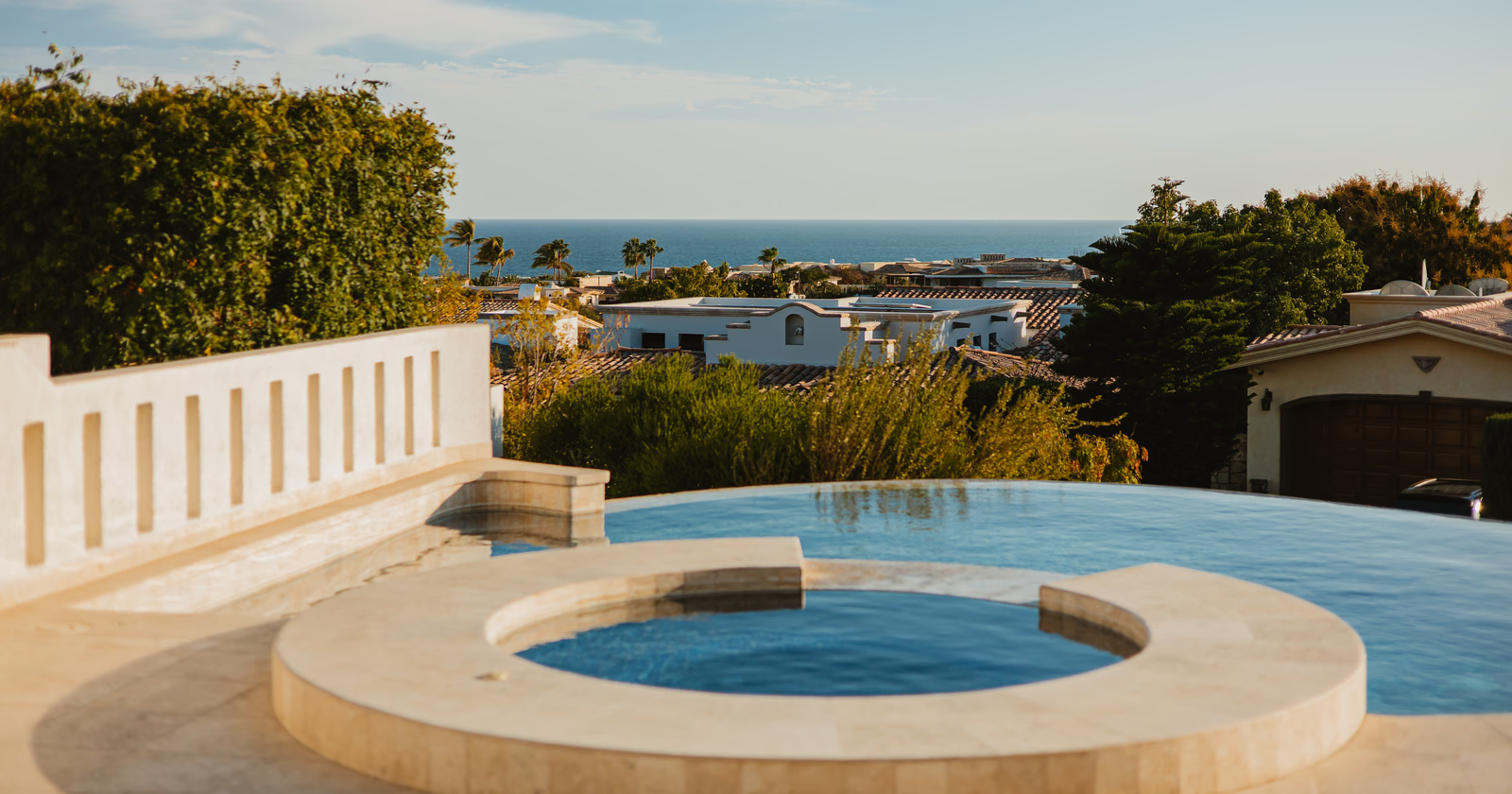
One of the most consistent questions I hear from buyers considering Los Cabos — particularly those coming from California, Arizona, Texas, and the Pacific Northwest — is whether a property here can generate meaningful rental income. The honest answer is that it depends entirely on what you are trying to accomplish, because Los Cabos is not one rental market. It is two distinct categories operating under very different economics, and conflating them leads buyers to buy the wrong property for their goals.
Over 13 years in real estate, the past 7 exclusively in Los Cabos, I have worked with buyers across both categories. What follows is a direct breakdown of how rental performance actually works here, what drives the variance in returns, and how to think about the decision before you are under contract.
The Two Categories of the Los Cabos Market
The first category is the established luxury communities — Palmilla, Querencia, Pedregal, Chileno Bay, Twin Dolphin. These are the addresses that define the market’s reputation. They carry the highest purchase prices, the most rigorous HOA structures, and in many cases, explicit restrictions on short-term rentals. Some limit the frequency of rentals. Some prohibit them during peak season to protect the residential character of the community. The result is that gross rental yields in these communities typically run between 1% and 3% annually, and that range assumes a property that is actively rented within whatever rules apply.
That figure is not a failure of the market. It reflects what these communities are designed to do, which is preserve long-term value, maintain exclusivity, and deliver a lifestyle that appreciates steadily through market cycles. Buyers who purchase in Palmilla or Querencia are not buying a cash-flowing asset. They are buying one of the most stable stores of value in the Mexican resort market, with the lifestyle to match. The investment thesis is appreciation and quality of life, not yield.
The second category is what I call the rental-friendly zones — the Medano Beach area, the Marina corridor, El Tezal, Cabo Bello, and the condo developments along the Tourist Corridor. These communities are built around short-term rental demand. They allow flexible rental arrangements, carry lower entry prices than gated luxury enclaves, and are positioned near the beach, the marina, or both. Gross rental yields here typically range from 4% to 8% annually, with the upper end of that range reserved for well-located properties under competent management in high-demand configurations — two and three bedroom units with ocean views or direct beach access consistently outperform studios and interiors.
The variance within that 4% to 8% range is wide and worth understanding. Location within the zone matters. Amenity quality matters. Management quality matters significantly. A property with strong Airbnb or VRBO reviews, professional photography, and a responsive property manager will outperform an identical unit that is self-managed from across the border by a meaningful margin.
What the Rental Numbers Actually Look Like
High season in Los Cabos runs roughly November through May, driven by travelers from California, Arizona, Texas, British Columbia, and Alberta escaping winter. Occupancy rates during this period typically run 75% to 90% for well-positioned properties. The summer months — June through September — are softer, with occupancy averaging 45% to 65%. Annualized, a well-run rental property in a rental-friendly zone can expect to be occupied 60% to 75% of available nights.
Average daily rates vary considerably by property type. A one-bedroom near Medano Beach typically commands $150 to $275 per night. Two and three bedroom ocean-view condos run $300 to $600 and above. Marina-adjacent luxury condos can reach $400 to $750 per night during peak periods. These are gross figures — what a guest pays before the platform fee and before ownership costs are applied.
On the cost side, HOA fees in rental-friendly communities generally run $250 to $800 per month. Property management fees — which cover booking, guest communication, check-in, and ongoing maintenance coordination — typically represent 20% to 35% of gross rental revenue. Cleaning and turnover costs are charged per stay. Rental income is taxable in Mexico under the IVA and ISR frameworks, and foreign owners are expected to file monthly returns through a local accountant. I refer clients to trusted professionals for this.
The net yield after these costs is what actually matters, and that math is specific to each property. A buyer who wants to understand what a particular unit will realistically produce in net annual income should model it with actual cost figures, not work backward from a gross yield percentage.
The Hybrid Approach
The largest segment of buyers I work with in Los Cabos falls between the two categories. They are not purely lifestyle buyers indifferent to rental income, and they are not pure investors optimizing for yield. They want a property they can use personally — a few weeks in the winter, a week in the spring — and they want rental income to offset carrying costs when they are not there. Appreciation over a 7 to 10 year horizon matters to them, but it is not the only consideration.
For this buyer, the right communities are those that permit short-term rentals without the restrictions that characterize the luxury enclaves, while still offering enough quality and amenity to make personal use genuinely enjoyable. Cabo Bello, select gated developments in El Tezal, Marina Zona Dorada condos, and Medano-adjacent properties represent the strongest options in this category right now. These are not compromise choices — they are purpose-built for exactly this use pattern, and they have the rental track record to support underwriting the purchase on realistic numbers.
The question I work through with every hybrid buyer is this: what is the minimum rental income that makes the ownership economics comfortable, and does this specific property, under realistic management assumptions, get you there? If the answer is yes, the lifestyle value is additive. If the answer is marginal, the lifestyle value alone needs to justify the purchase — and for most buyers, it does not.
How to Think About This Decision
Los Cabos can deliver strong rental performance or exceptional long-term appreciation, but it rarely delivers both from the same property at the same price point. The buyers who are most satisfied with their purchase three and five years later are the ones who were clear about their primary goal before they chose a community — not after.
If you are approaching this as a lifestyle purchase with appreciation as the long-term thesis, the luxury communities represent the most compelling case in the market. If you are approaching it as an income-generating asset with personal use as a secondary benefit, the rental-friendly zones deserve serious attention. If you are somewhere in between, that is a conversation worth having in detail before you start looking at specific properties.
I work with buyers across all three of these profiles. The starting point is always the same: get the strategy right before you get attached to a particular address.
Nolan Bonnstetter
Real Estate Professional | Own Cabo Homes
Los Cabos, B.C.S., Mexico
+1-515-802-7151Nolan@owncabohomes.comhttps://owncabohomes.com/